
Whispering Into Myself: Christopher Mack
On finding your voice, owning your path, and learning to love the process.
Chapters in-between: At any given time, we are all a draft-in-progress. Conversations with people navigating the in-between chapters: the pivots, the pull of creativity, the challenges of leadership and the unfinished arcs that shape us most.
We ask the deep questions and give time to answer, because great stories take time. This series is the long read many of us are craving.
Before the industry titles, there’s the kid who got lost in The Hobbit, the athlete-nerd who spent weekends inside a world built from dice and imagination, the law student who shot a chaotic short film because the pull toward story wouldn’t quiet down.
Christopher Mack’s career spans writing rooms, talent workshops, and global development - work that now centers on championing storytellers.
In this Fieldnotes Q&A, Chris talks candidly about fear, mentors, craft, compromise, and why saying it out loud matters.
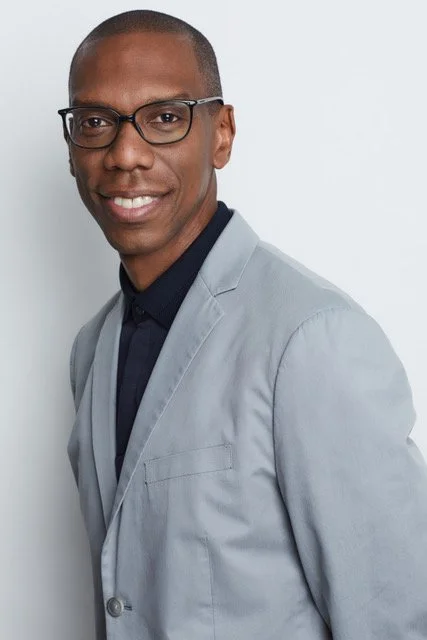
Christopher Mack.
Who is Chris Mack today - both in work and in spirit?
I see the Chris Mack of today as a guide to help writers find their voice. And once they find it, helping them master the structure to tell their stories in a cinematic way. A way not only that entertains but encourages them to reveal something or ask pertinent questions about the human condition. At the end of the day, I think all great artists strive for this.
I’ve been in love with story all my life, since I was a kid, and I consider it a privilege to be part of the storytelling industry for so many years. I’d say I’m a champion for storytelling, for the process of storytelling, and for those who want to tell their stories around the world.
Where did that love of story begin for you?
It was always there. I was a voracious reader. My parents were divorced, my dad worked a lot, and I was what you call a latchkey kid. So there was a lot of time with TV and a lot of time with my imagination.
In sixth grade I did a book report on The Hobbit. Instead of reading a written report, I just told the story, got lost in it, and the teacher got so excited she made The Hobbit required reading in her class. That was a moment I realized “wow a story can have an impact”. Because I had read this book, I made an adult excited about it. That really stuck with me.
I was also a bit of a nerd alongside playing football and basketball in school. After that report a classmate, who was a well-established nerd, invited me to play Dungeons & Dragons. We played all weekend. I was able to balance athletics with the storytelling of books and games.
You studied law and planned for real estate. How did Hollywood happen?
I went to law school to ride out the economy and wanted to be a real estate lawyer. I wanted to build skyscrapers. That was kind of the dream. I was fascinated by skyscrapers because of this movie called The Towering Inferno - one of those disaster movies in the 70s where they had every A-list actor you know.
After my first year of law school though, I talked to a bunch of lawyers who told me they hated their jobs, and I thought, ‘What am I going to do?’ And during college, l I worked at a video store called Video Wiz and I loved it. I loved movies. So much so that I knew all the names and I was a geek and could tell people what to watch.
So my sister said, ‘Why don’t you get into the movie business?’ I thought to myself and was like ‘Yes why don’t I?’ And the main reason was that, because I was the child of a first generation civil rights parent, the path was that I go to school and get a job. Basically doctor, lawyer or engineer. The arts were not one of those jobs. So, without telling my father I decided to pursue a career in the industry while finishing law school so I wouldn’t be a starving artist. Honestly, it was the first real adult decision I made in my life because I took full agency of life and where I wanted to go.
I networked like a madman and it paid off.I got lucky and ended up never working as a lawyer. My first job was at NBC the year they picked up Friends and ER. I entered Hollywood during the golden age of television.
For people who hesitate to “say it out loud,” what’s your advice?
I know a lot of frustrated writers who secretly write at night. Until you can say to people, ‘I’m a writer,’ you’ll be less successful than someone who owns the role.
Start by telling family and close friends. If you don’t believe you’re a writer, nobody else will. I do believe that the brain is a powerful tool in that it only does what you believe, whether consciously or subconsciously. If you believe it and say it out loud, then your brain will make you do the things to get there.
Of course there is no guarantee of success, but at least you are doing the right things that you need versus holding back and not taking that risk to, for example, reach out to someone and say ‘Hey I want to be a writer. Can you help me do that?’
What I also tell people who have day jobs and they want to write is to flip the schedule: wake up early and write when you have your best self. Make writing your primary job and your day job the side hustle.
Who helped you along the way?
So many people - people who were recognized as mentors, people who didn’t even know they were mentors.
It is important to pick and choose certain attributes that you respect from other people, but also people that you know and did not like and saying ‘I don’t want to be like that person’. It just happens organically and it is hard to say that I did any one thing to find mentors but I think once people see that you have the desire to do something and that you will follow through, they just want to help you.
For me, mentors were involved in many different chapters of my life. At NBC, Joanne Alfano. John Landgraf at FX would take me to lunch and talk me through things when I was a young executive.
In writing, showrunners and other writers took me under their wing. Michael Duggan, who was my first boss, and Ira Behr who taught me everything I know about story.
At Warner Bros., my boss Melinda Hage taught me how to talk to creatives and have constructive, hard conversations that inspire you instead of destroy you. I found that once you crack that code, it gives you power in being a creative partner and in life in general.
Was there a single moment you decided to go all in?
I decided to write a script before leaving my executive job so I could be a better partner to writers. Over Christmas I wrote a spec for Homicide: Life on the Street.
A month later, a woman named Gwenn from the NBC travel department stopped me in the studio hallway and said, ‘You’re a writer now. You need to tell your story. The world needs to hear it.’ This blew me away because I had told no one - not even my girlfriend at the time- that I had written the script. I was also having a bad time at work with some of my colleagues and she said, ‘I can feel you are struggling at work. Just remember, when a pig eats a pearl and s**** it out, it’s still a pearl. You’re that pearl.’ She told me, ‘When a mama eagle makes a nest, she puts thorns and bristles on the inside so when the baby grows, its wings hit the thorns and it’s forced to go out and see the world. I don't think your wings are quite there yet, but they're close, but you'll know when the time is right.’
She finished by saying that my “gift” would be ‘the ability to whisper in people’s ears to help them find their creative path.’ When the universe speaks, I listen. That’s when I went all in to become a writer.
How important is it to have a ‘voice’?
My mentor at the time Joanne Alfano read my script and said ‘This is a great script but I have some concerns. You’re going to be competing with people who have been writing for a very long time. Some of them since they were six, some of them are award-winning writers.’ And so she asked me ‘What’s your voice as a writer?’ She said writers should have a voice before they’re paid, because once the voices start coming at you, you can get lost. And she was right. I would end up quitting after seven years because I was too focused on trying to sell stories versus telling stories that mattered to me.
So, whatever your medium - writing, photography, oil painting - it is important to have a point of view and a creative intention. Writers who try to write for the industry are less successful than writers with a specific voice. Identify who you are, own it, and your people will find you, maybe. But at least you’ll be doing work that fills your soul versus something that is soul sucking.
What does “making it” mean?
At a basic level, making it is initially being paid to do something you love - paying your bills by doing the thing you love.
But then there are other metrics, such as finally telling the story you’ve wanted to tell your whole life, even if it makes no money, can still be a success. It’s subjective.
Do we romanticize the creative life?
There is a certain amount of romanticism on what exactly it means to be a creative person. You are always in negotiation. If you are someone who doesn’t like to collaborate, doesn’t like to compromise on their vision, then maybe the creative industry isn’t for you because it is filled with compromise. Maybe you should be a novelist, for example: there are other ways to be creative and get your stories out there.
And any time someone gives you money, they’ll have a point of view - and they should. You have opportunities at every step to walk away. If you give a corporation your IP, align clearly on how it will be used. Don’t be afraid to set that alignment up front.
What are three qualities that sustain a creative life
Curiosity: creators are observers of life and reflect it back so people see themselves.
Courage: first to call yourself a creator and say it out loud, then to fight for the story you want to tell.
Collaboration: our experience is one road. When someone says, ‘Have you thought about this?,’ consider it. Great stories dramatize multiple points of view. Listen to notes. Ask what someone means. Think about it, then come back with an informed response, even to the people paying you. Another rule of thumb I like to follow is how Al Gough and Miles Millar -the creators of Smallville and most recently Wednesday approach to taking notes - If one person has the note it can be seen as an opinion. But multiple people have the same note, it’s a problem.
Is it harder to break in outside the US? What helps?
It’s probably easier in the US because the machine is big and always looking for ideas. That said, it’s getting harder to make a living as a writer in Hollywood.
Smaller ecosystems mean fewer opportunities; statistically, it’s harder. Streamers open doors, but many writers compete for the same slots. Clear voices matter. More and more, buyers are buying the voice rather than the idea.
What excites you about where storytelling is headed?
I was reading this book called The Science of Storytelling by Will Storr and he says we all know the end - we end up in the dirt - and yet we still look for purpose, we still try to find stories in our lives that give us a reason to exist and move on. Social media shows how much people want to tell stories and be part of the conversation. Those of us in legacy media have to recognize that people want to tell stories and to be part of the conversation.
I am also curious about AI. I speak to a lot of young people and they say ‘Oh I am dead set against AI and will never use it’ and I respond ‘Don’t use it at your peril’ because a lot of companies are using AI. So you should figure out how to apply AI wisely. I think using AI as an assistant researcher is a very powerful way to help you investigate worlds that you know nothing about. On ER we hired doctors as consultants; if you can’t afford that, AI can help with language or areas to find conflict that will help drive the narrative.
What keeps you creatively grounded now?
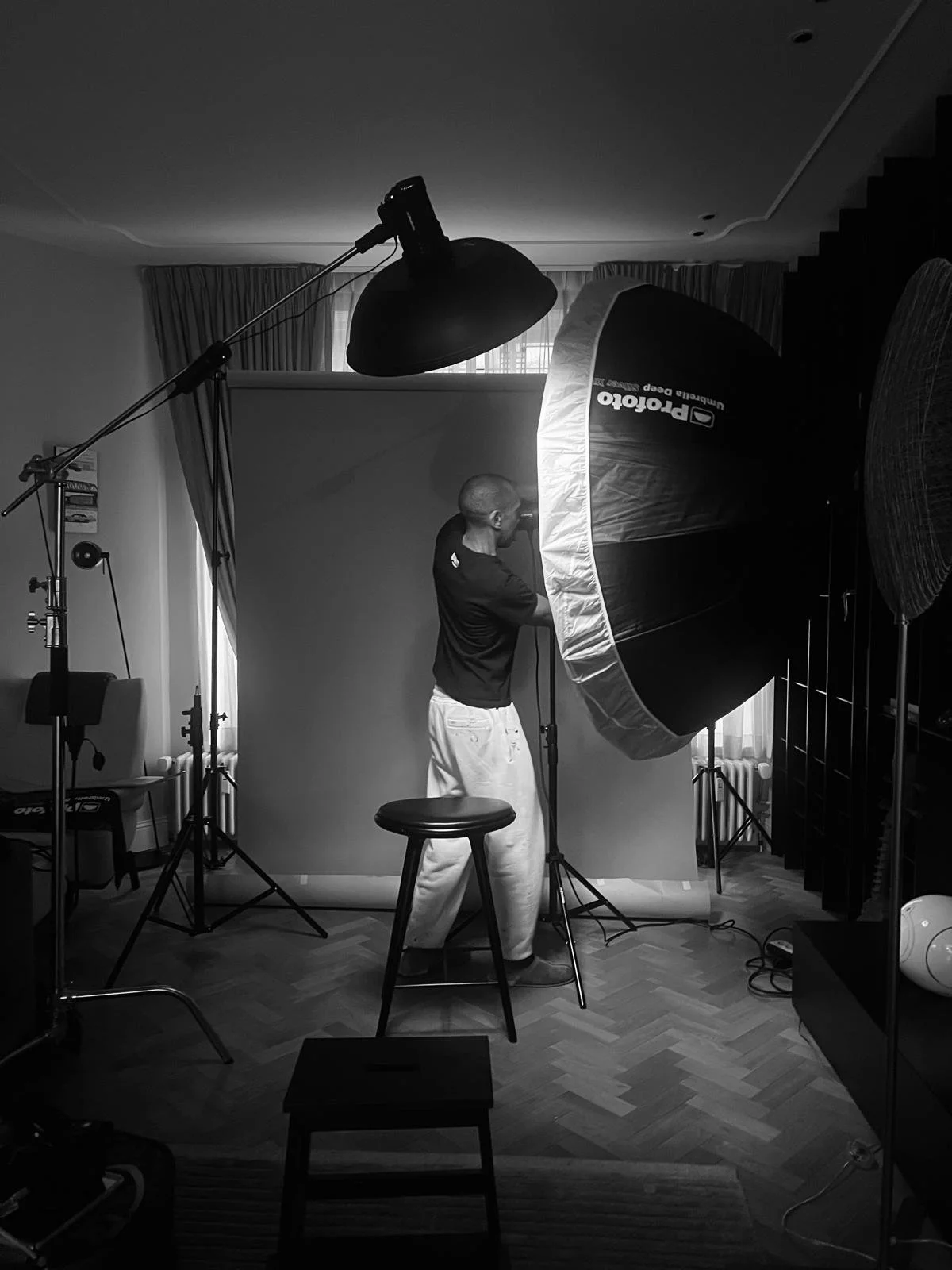
I don’t write scripts now, but I write workshops - I’m still telling stories. Today, photography is my creative outlet for what I like to do on weekends. I take a camera when I travel; I shoot and edit on weekends and mornings.
Izzy Abidi helped me articulate what I want to do with photography after this chapter at Netflix. To be able to say out loud that I want to be a professional photographer when I retire is liberating and helps you keep your eyes on the road and start making intentional decisions to get where you want. Everyone should have something beyond the day job to aspire to. Otherwise it’s harder to let go.
If your life were a book, what would you call the chapter you’re in right now?
I’ve spent so many years whispering in other people’s ears to help them find their own creative paths. Now I’m now starting to listen to my own voice to help fuel my photography. So, I guess I would call it: Whispering Into Myself.
Fieldnotes
If there’s a throughline to Mack’s journey, it’s this: voice first, then everything else. Say it out loud. Put your best hours where your real work lives. Welcome mentors and the mirrors they hold up, especially the ones who model who you don’t want to be. Stay curious, be courageous, and treat collaboration as craft, not compromise. And when the machine asks for your story, make sure it’s one that feeds your soul.