
The Cocoon Years: Taha Arshad
On discipline, instinct, and claiming the life he once called “Another Life”
Chapters in-between: At any given time, we are all a draft-in-progress. Conversations with people navigating the in-between chapters: the pivots, the pull of creativity, the challenges of leadership and the unfinished arcs that shape us most.
We ask the deep questions and give time to answer, because great stories take time. This series is the long read many of us are craving.
Some chapters announce themselves loudly. Others only reveal their significance in hindsight.
When we speak to Taha Arshad (@tahalikesyou), he is in what he later calls “the cocoon.” Not quite the caterpillar anymore, not yet the fully formed version of the career he imagines. He is somewhere in between: having left a stable research role, building an audience online, signing to an acting agency, producing his own series, and learning how to hold discipline and instinct in the same hand.
What follows is not a highlight reel of virality or brand deals. It is a conversation about financial pillows, family pushback, gut instinct, saying no to money, and the quiet muscle of discipline. It is about what it actually looks like to build something while still inside it.
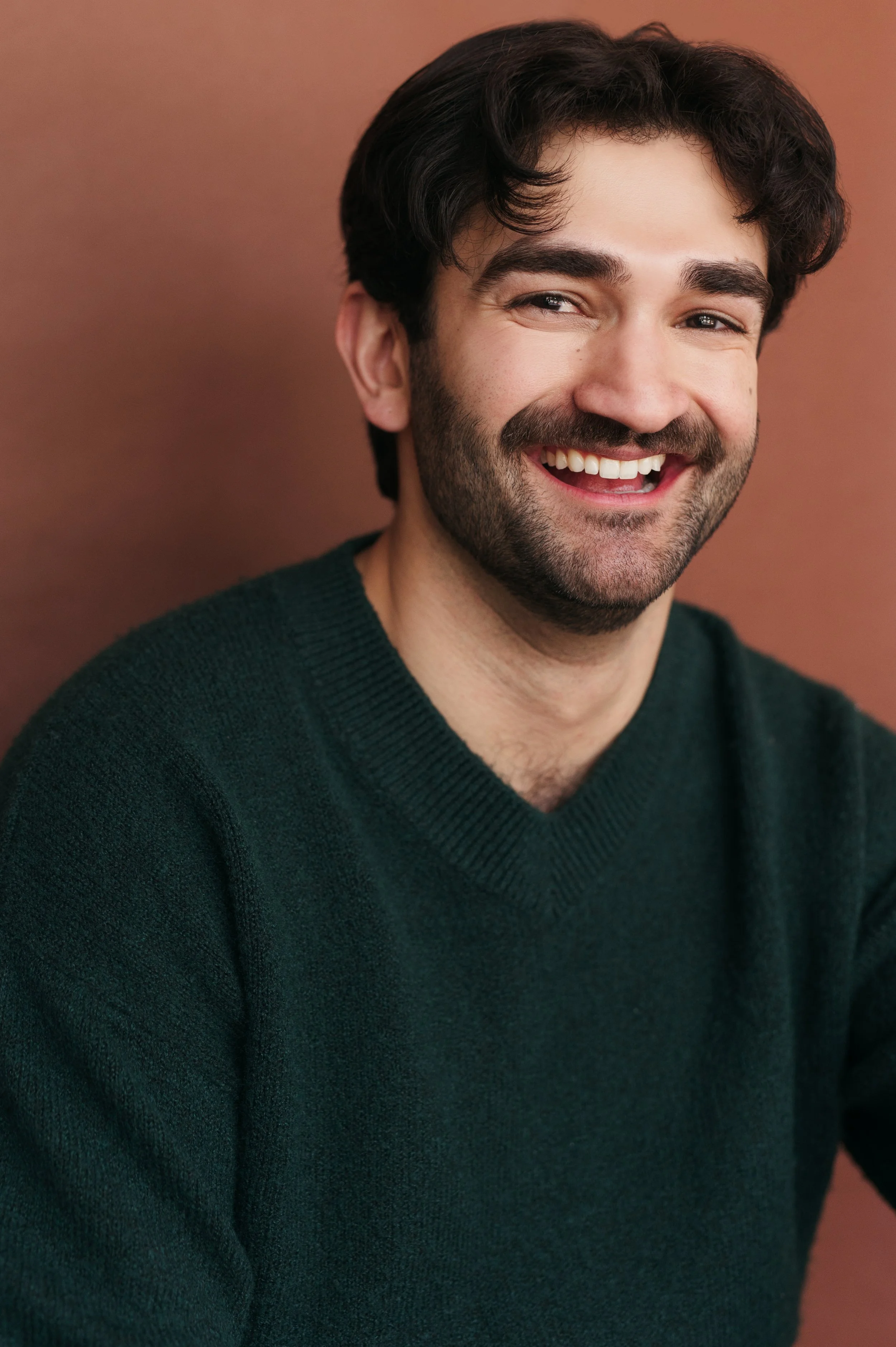
Taha Arshad. Image courtesy of Taha Arshad. Photography by Sam Gaetz (Gaetz Photography)
If you were to meet the 2030 version of Taha, how would you like your future self to feel about you today in both work and spirit?
I would want them to think of me as somebody who worked very hard to chase their goals. Which sounds vague, but I think with the kind of goals I have career-wise, regarding the space I want to take up in the entertainment industry, we don’t know where life goes. A lot of people have dreams. A lot of people aren’t able to accomplish them and that’s okay. We find a way to move forward. That’s very much a possibility in my life as well.
I would want the future version of myself to know that whether I’m successful in this specific domain I’m trying to accomplish, achieve success in or not, I’d want them to know that 2025 me did their best regardless and was working their butt off.
Discipline is really big. I want them to think okay 2025 Taha is hardworking, disciplined and regimented and focused.
When were you first drawn to performance and creative expression? Is there a particular memory where that clicked?
When I was really, really young, age three or four, I used to really like dancing to Bollywood music to my family, at my family. Which was really, really enjoyable. Allegedly, I was four, I don’t remember. This is probably TMI, but apparently I’d just take off all my clothes and dance, which sounds very freeing. So, you know what? Kudos to that version of myself.
When I was 10, I started making YouTube videos. I had a series on YouTube. This was 2005. No one watched them, but I really, really, really was into my little series that I was making. I made like a one-off YouTube video when I was 10, but when I was 11 is when I made the series. Which was me making a vlog about my life or talking about things and doing funny skits in it. I’m so mad because I deleted almost all of them. I was 14 being like, ‘Oh my god, that’s so lame.’ And now I’m like, s***, I wish I didn’t delete them. That was so stupid. I could have just made them private.
Throughout high school and university I had done musical theater on the side and then I’d also done it postgraduation in Toronto for a bit. So for a span of about 10 years I was performing in that capacity and getting vocal lessons, trying to train as much as possible in that craft.
I didn’t end up pursuing theater just because I had a degree in science and I was like honestly the low pay in theater is so not worth the amount of effort you put in. TV and film on the other hand is a different story. That would be many years from then. So I was like okay I’m going to refocus my career into my science career that I have my degree in that I did well in. And so I focused on that and I was able to support myself much better.
And then the whole social media thing took off in a happy series of accidents, events in 2021. Now I’m here where I’m super fortunate to be able to make content that excites people, makes them laugh. And my goal is to transition into the producing, writing, and acting space.
How much do you think your cultural background played a role in being drawn to performance?
I grew up watching so many Bollywood movies. They’re very theatrical. They’re very dramatic and I really, really love them and it’s played a huge role in my love for performance for sure.
I remember I used to wear a shirt on my head when I was a little child, again four or five, and pretend it was my long hair and I wanted to be like those sexy Bollywood girl dancers or performers.
Not Bollywood specifically now, but the culture as a whole. It informs a lot of my content in both direct and indirect ways. I’ll obviously talk about culturally related, relevant things in my videos, but even on a subconscious note, just a love for it is kind of in my heart.
I think sometimes you see a lot of creators online who maybe look at their culture from a place of mockery almost, even if it’s not intentional. I do my best to make sure that is never the case with me. I like to think you can tell that my stuff is rooted in a really deep love and connection to my culture.”
What was the defining moment that made you take the shift into content creation from your science career?
When I was applying to universities, a part of me did want to apply to theater school and my mom was severely against it. This might not be a good thing to say, but I’m really glad she didn’t let me go to theater school, or any sort of acting school instead of university. So much of my understanding of the world was shaped by the fact that I went to a standard academic university. And the fact that I had that job security and financial stability to fund my life while I pursued content is the reason I could do any of this, and I liked my major. I liked it enough.
There are people who will say money doesn’t matter and it’s not an object. I think that may be true for some people. I think there is still something to say about having a financial pillow so that you can comfortably pursue your dreams because if you’re not comfortably pursuing acting, you’re going to be stressed about paychecks instead of actually relaxing and honing your craft. Relaxation is one of the most important things about any sort of audition or acting gig. You need to be breathing, to be present.
I started making videos in 2021 simply because it’s funny. My ex and I had broken up after almost 3 years earlier that summer. He was really into the idea of making TikToks and videos. He’d be like, ‘Oh, I have this funny idea. Can you just be my cameraman?’ And I’d film them for him. And they were just really not funny.
I realized I had a lot of opinions about why they were or weren’t funny. Humor, along with many other things, were not one of his strengths. It made me realize, oh my god, wait, I have all these notes about how you could make his videos actually funny and get people to watch them. Why don’t I try doing it on my own?
It was a little scary. I thought about it for a bit, but I was like, ‘No, it’s too soon after the breakup. My heart will be sad if I open the app and start doing it because I’ll miss him.’ But then by November, I was like, ‘Okay, let’s give it a shot.’ It was pretty quick. It didn’t take too long before the videos started to do well. People started to resonate with them, which is really special and cool.
I quit my job in December 2023. I worked as a research coordinator at Women’s College Hospital. I was leading this really special project that was looking to provide research based services and connect a bunch of national resources that were going to help trans women who were suffering from domestic violence because they’re a largely disproportionately targeted group.
The joke I say when I tell people I quit to pursue content is ‘Yeah, so I quit this job where I really, really help a population I care about so that I can make TikToks online.’ So I’m just a really terrible person.
But the truth is, in my heart of hearts I know there are hundreds of people who could take up that space I held in research and do a better job than me. Whereas I don’t believe the same for what I’m pursuing right now. And that was the key difference for me.
Was quitting your job easy?
I was only willing to quit my job when I had two things. One, I knew I wanted to pursue entertainment as a career. And number two, I felt financially stable. It took me a couple of years to start getting brand deals. Once I started getting them, I was like, ‘Okay, between the brand deal money and the money I’m saving every month from my research job, I want to have enough money for 12 months rent if I’m going to quit my job.’ That way, if I fail miserably and don’t make any money whatsoever, I have a security blanket.
I always told myself, in another life, I’m an actor and I write my own TV shows and I produce stuff. It was always this other life thing. I was like, holy s***, that could be this life. And so I decided, I’m going to dive in. If I’m going to quit my job, I’m going to lock in, work my ass off, make sure I’m posting consistently, while also writing the pilot of my dream TV show.
How did your parents respond when you quit, and where did you find support?
It was not received well by my parents. I got into a couple of fights, screaming matches actually with one of my parents, and a more leveled argument, fight, debate with the other parent. They were really worried, which was annoying for me but I also get it. This is a completely new industry. We don’t know how long term it is. We don’t know if it’s going to even hold up in the next five years.
My friends have always been supportive since day one, so that was always great. The biggest support I needed at the time was actually my brother. I talked to my brother after having these arguments with my parents and he specifically said, ‘You are confident. You’re doing well for yourself. Just do it.’
I told him my reasoning. I was like, ‘I just don’t see any other opportunity to quit. This is perfect. If there’s going to be an opportunity for me to pursue my dreams in my life, even if it doesn’t work out, I can go back to research if I need to, but if there’s any moment, it is this moment.’ And he was like, ‘Absolutely. You don’t have kids. You aren’t married. You are in your 20s. Do it.’ And I was like, ‘Oh my god, that’s so validating and relaxing to hear.’”
Do you think their hesitancy was tied to how non-traditional this path is?
Correct. That was their main concern. For my mom it was, I want you to be financially stable. I never want you to worry about money. For my dad it was optics. It was, I don’t want my friends to think you’re illiterate.
With my mom, her concerns were rooted in actual care. With my dad, it was very just optics for my dad. That’s the truth of the situation.
Context wise, my mom’s dad was a Bollywood director and screenwriter. I think that’s why she had less qualms about that. From my dad’s perspective, he grew up very poor in Pakistan. His family wasn’t super educated. He had worked his ass off to get to where he was so he could have a job and kids that went to a good school in the UAE before my parents separated and we moved to North America. So I do understand where he was coming from.
You speak openly about your sexuality. How has that shaped the way you engage with audiences, especially when people react negatively?
It’s given me a lot more empathy and a lot more patience with people that might be s***** to me online. Mind you, I’m still very happy to roast people that are s***** to me online. I’ll do it. I still do it. It makes me very happy.
Seeing that my family was able to become more accepting of me over time is something I’m very privileged to have. It gave me an insight of what it looks like when people are actively changing their views on something. What kind of questions do they ask? What kind of things do they say? It showed me that even people that I never thought would be able to come to terms or accept something about me could eventually be able to.
One of the many reasons why I don’t take all these s***** comments to heart most of the time is I know there’s capacity for change. There are a lot of people that follow me that are just like, ‘Oh, he’s funny, but I don’t support the gay stuff.’ But I know that deep down they’re seeing every time I post they see that I’m just a normal person and they’re like, ‘Oh s***, he’s actually normal. Maybe I’ve been brainwashed to some extent.’ It’s always the same story. Oh s***, I actually met someone and they were literally normal.
For someone new to your work, how would you describe your voice? Do trends and algorithms affect it?
I would describe my content as being a combination comedy but also political content when it needs to be. That includes skits. That includes me yelling at my phone on my toilet and everything in between.
Regarding algorithms, yeah, algorithms definitely do influence the topics of things I talk about. Things that are more trendy will do better. The other day I made a video about AI, for example. I knew that it’s a topical thing and I’d seen a couple videos on it. So I was like, oh yeah, I want to make an AI video too.
It was about the dangers of personifying AI and these weird one-sided relationships people are having with their computers. That’s something I’ve cared about for a while. It’s adapting the core principles that I believe in to different topics that maybe are trending.
What would you say is your lens, the core principles, regardless of trends?
Humor combined with empathy. Being funny about it, but also leaving the people watching the videos, most of them, some of them are just silly for silly’s sake obviously, but leaving people with laughter and also something to think about. Being intentional about humor as a tool to educate. That includes empathy.”
Has anything unexpectedly resonated more than you expected?
Yes. Sometimes I’ll post a video and I’m like, ‘Oh, this is a whatever video.’ And it’ll do super well.
I made this funny video about how to deal with people that are gaslighting you by gaslighting them back basically. I was really tired that day and I was like, oh yeah, I had this video idea, whatever, I’ll just do this one today. It got millions of views and I was like, what the hell? Okay, I guess people really resonate with this.
It’s hard to know what the hive mind craves. Stuff I really like will do poorly and stuff I feel lukewarm about will do really well and that’s just how it is.”
Have you ever posted something and then changed your mind after criticism?
There have definitely been a couple of videos I’ve made, and when I say couple, I mean literally just two, where I had shared a take and most of the people within a few hours in the comments provided really strong counterpoints, which made me completely change my mind.
I was like, ‘Oh s***. Oh, I actually don’t like this video that I made. I don’t agree with myself anymore.’ So I just removed it. I’m like, ‘No, this was a dumb take. I should have done some more critical thinking before posting it.’
It absolutely happens. It will continue to happen. I think it’s important for us not to be egotistical about that. It should not be about the ego. It should be about the message you’re pushing out there.”
Since going full-time, what have been the next big leaps into the entertainment space?
The next step once I pursued content full-time was how can I take up space in the entertainment industry as somebody who acts and writes and produces.
One step I was able to take was signing to an acting agency I really, really wanted to get into. That was a significant step for me because I was like, ‘Holy s***, I can have access to tapes and auditions and be seen by casting directors.’ It gives me experience. It gives me some credits. Even if I don’t book something, the practice of auditioning for stuff while I’ve taken acting seminars on the side to improve my craft, that in itself is rewarding.
It also gives me legitimacy. It’s kind of like a badge. If I say I want to pursue acting, writing and producing, and I tell people the agency I’m with, it gives me credibility for when it comes time for me to pitch my show.
The second big step I took was producing, writing, and starring in a miniseries that I’m releasing next year. That was huge for me because I needed some sort of proof for studios that the larger TV show I’m writing is something I can create. By creating this miniseries, by handling all of the production, all of the writing, starring in it, handling all the finances, all of that stuff.
It is so much work. It’s still in post-production, but it’s going really well. It was a crash course in everything.
How do you think about the financial side of taking those steps?
A big piece of it is while you’re pursuing something, while you are working your nine-to-five and need to work your nine-to-five, you have to look at your five-to-nine. When I was working my nine-to-five, I would work, come home, upload content, edit it. They were long tiring days. But you have to think of it as an investment.
If I want to eventually quit my job, I have to find a sustainable way to maintain having my job and having this creative thing so that I can nurture it enough that I can eventually quit the job. You really have to be strong on discipline and regimen. Discipline is probably the biggest reason most people get whatever they want.
I think the best directors, actors, musicians, creative people we see, they’re not the best because they’re objectively the most talented in the world. There are people way more talented than these people who don’t have the discipline to have pursued these careers. So now we don’t know who they are. A lot of it is just discipline.
Has content creation ever started to feel like a chore?
Maybe a little, but honestly, I really, really love it. A big thing for me is setting myself up in situations where I can keep enjoying it.
Sometimes I will feel some sort of block. Like the other day, I was like, I don’t feel funny. I don’t feel like uploading something. I don’t want to force myself. I looked through my list of things I want to make videos about and I was like, I don’t feel it. So I took a nap because I was tired.
I woke up and I was energized and I was like, oh, I want to make a video about AI. So whether it’s getting rest or going on walks or hanging out with friends and family, I’m able to rebuild that creative spark.
If I’m not feeling it, I try not to ever force myself because then I’m going to have a weird relationship with the content stuff. I think it starts to show. So it hasn’t really felt like a crazy chore. I allow myself to be like, you know what, I don’t have to post a video today or tomorrow if I’m not feeling it. I’m not going to force it.
How did you come up with the name of your social media handle “@tahalikesyou”?
It’s strategic. My original TikTok account was called Merciful Rat because it was this Xbox gamer tag that was randomly generated for me. Merciful Rat got banned because I broke a few violations and also people were reporting me because they didn’t like that I was gay. It was a mixture of things.
I was like, ‘s***, I have to make a new account.’ I was like, ‘Okay, I have to make it very brand friendly and positive.’ No brand wants to work with someone named Merciful Rat. So I was like okay, likes you is sweet. It’s parasocial. It makes people think I like them even if I don’t. It makes brands want to give me money.
On that note, have you turned down work that would have helped financially, but did not align with your values?
Yes. I have lost a f*** ton of money by turning down huge brand deals because they were on the BDS list. I like to advocate for Palestine. It’s important to me.
I turned down a really big brand deal last year with Fanta because Coke owns them. I was like, ‘Oh my god, this money would have been so good for post production.’ But I was like, ‘No, no, I want to have a clean conscience.’
The power of saying no to something that I don’t vibe with makes me feel like I have agency. It makes me feel like I have magic special powers. I’m like, ‘Oh my god, I turned down the thing that corrupts people.’
I’ve turned down deals with Google, Amazon Prime, Fanta, L’Oreal. It’s a lot of money, but I’m like, I will find ways to make the money I need to. I’m so lucky. My stuff is doing well that I have the power to say no to these things. Ultimately, I can afford to say no. I don’t want greed to take over my moral compass because then I lose who I am. If I lose who I am, then there’s no point to life.
Would it be a different situation if I was really struggling financially? Probably. I don’t know what that would look like. Where do you draw the line? It’s tricky. But yes, I’ve said no to a number of things that I don’t agree with and I feel great about it.
If someone feels stuck in their nine-to-five and wants to start moving toward something more authentic, what practical first step would you invite them to take?
Look up content on YouTube and Instagram and TikTok of people that have quit their jobs to pursue the career you think you might want. That’s a really good starting point because people are tangibly there sharing their examples.
I think living in the YouTube era gives us so much access to enormous amounts of personalized data.
You will find that there’s always somebody who did something similar to what you’re doing. Make notes. See what you can parallel because the data is there. The human who pursued that is there. Figure out where you fit into their displayed pattern of behavior and see how you can apply it to your life.”
Finally, if your life right now were a story and you had to name this chapter, what would you call it?
The cocoon. I think a large majority of my life will be spent swimming in the career that I’m currently building myself, but I think these five years have been a cocoon period and I’m like the caterpillar breaking down and reforming.
I’ll remember this as this huge transition period where I was quitting my job, making videos online, then realizing I wanted to do entertainment, reconnecting with Izzy (Freshly Ground Stories founder) after years, and figuring out what I wanted to do. All of these big steps are happening in this part of my life. And I can feel my future self looking back at me right now and being like, ‘This is a lot of change.’ So I call it the cocoon.
Fieldnotes
If there’s a throughline to Taha’s chapter, it’s this: discipline, with a conscience. Build the financial pillow before you leap. Treat your five-to-nine like an investment. Follow your gut, but keep your head switched on. Let rest be part of the workflow, not a reward at the end of it. Change your mind when better thinking arrives. Say no when the money costs you yourself. And if everything feels like it’s breaking down and reforming at once, it might not be failure. It might be the cocoon.