Force Majeure: How the fancy-sounding French word works when the global reality is pandemics, wars and travel disruption
A clause most people skip past is suddenly doing a lot more work
Freshly Explained: plain-language explainers (not legal or financial advice) on commercial, legal and financial concepts for creative-industry professionals.
There is a paragraph sitting in most of your deals right now. It has been there for years. It probably lives somewhere near the bottom, after the payment terms and before the governing law clause, and there is a reasonable chance you have never read it all the way through. It’s often placed in the safe bucket of “let’s leave that to the lawyers”.
It is called Force Majeure.
Right now, wherever you are in the world, Force Majeure matters. If you run a business, yes, leave it with the lawyers to finesse, but it’s fundamental to have a basic understanding of how turbulence works when your business is about to pass through stormy weather. What does it actually mean when the world outside your contract starts moving?
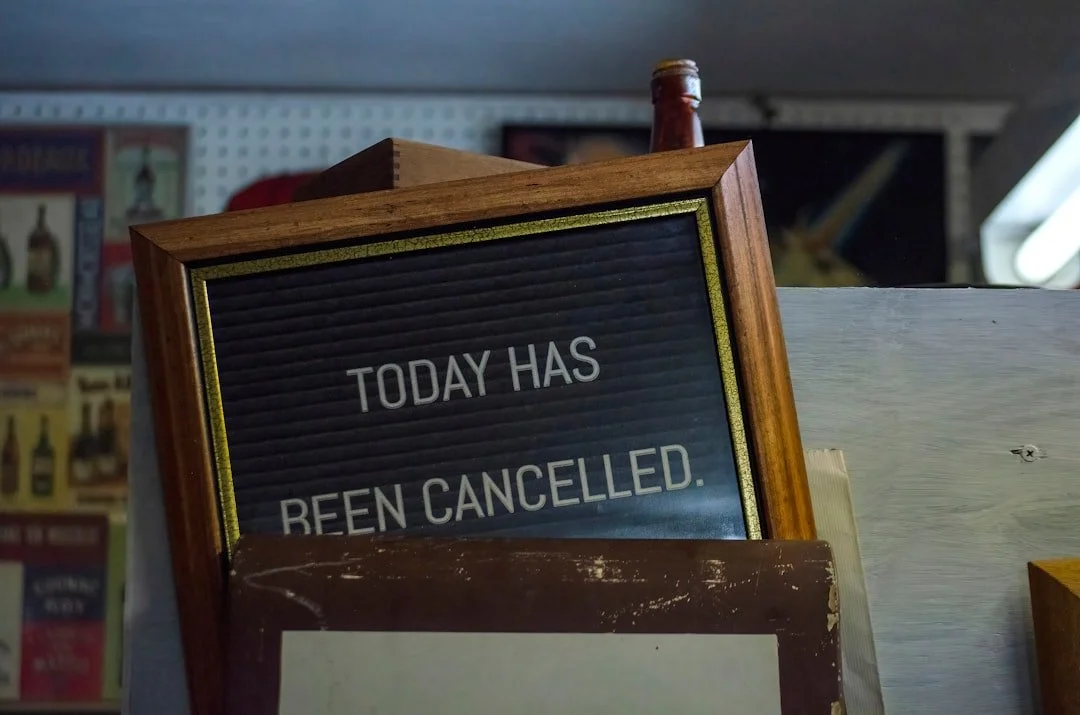
Photo by Robin Jonathan Deutsch
What it actually is
Force Majeure is French for superior force. In contract language, it is the clause that answers the question: what happens to our deal when something completely outside either of our control makes it impossible to deliver?
Historically, it was written for floods and earthquakes. ‘Acts of God’ to cover a pretty wide range of circumstances, the old drafts used to explain, which always felt slightly like it belonged in the fields of academic theology or philosophy, rather than a practical legal tool. The clause has its own origin story in Roman law and it has since developed to include human-created disasters. Today, in many legal systems (particularly those based on common law), Force Majeure only applies if it is explicitly written into your contract. It’s not automatically implied.
Generally speaking, force majeure should be (a) unforeseeable i.e. you didn’t see it coming (b) external (not caused by either party) (c) unavoidable. You can understand why legal academics had a field day in 2020 breaking down the nuance of this. That debate will run and run. What matters more for your business is whether your contract is ready for the world you’re actually operating in.
The reality, for decades now, is that the world that clause was written for and the world creative businesses are actually operating in have grown quite far apart. Right now, many of us are working with clients, partners, or crew members in places where airspaces are closed, where shoots have been evacuated mid-production, where partner’s offices are in a city under missile alert, where we’ve dialled into producers smiling on the screen whilst their shattered office window is taped up. They are no longer hypotheticals. They are a regular Tuesday.
And yet, most contracts in the creative industries, from large commissioning organisations down to a single freelancer’s service agreement, still have a Force Majeure clause that was copy-pasted from somewhere else, reviewed by no one, and understood by fewer.
The conversation nobody wants to have (but really should)
Here is the honest tension: bringing up Force Majeure in a deal conversation can feel like you are catastrophising, especially when you add the cultural nuance where some might approach the coping mechanism with “we’ve lived through this our whole lives and we just get on with it”. Nobody wants to be the person at a dinner party who wants to discuss emergency exits before the starter arrives. It partially explains why the clause becomes “let’s leave that part to the lawyers”.
A reframe: Force Majeure is not a pessimist’s clause. It is a clarity clause.
The best time to agree on what happens when things go wrong is when everything is still fine, when both parties are motivated, when goodwill is high, and when the answer does not need to benefit one side over the other. That window closes the moment something actually happens.
So instead of treating it as a legal technicality to get through, try treating it as a practical question between two people who both want the project to succeed:
“If something completely outside our control meant we couldn’t deliver this, what would we want to happen?”
That is it. That is the conversation. Everyone’s on the same side. From there, you are just writing down the answer.
What good Force Majeure language actually does
Most boilerplate (i.e. standard) versions do three things poorly and one thing well. They define the triggering events too narrowly (or too vaguely), they say very little about what happens next, and they often favour whichever party had their lawyer draft the contract.
What good language should do, especially in the creative industries, is give you a working framework for four questions:
What counts? Not just earthquakes and pandemics, but airspace closures. Port shutdowns. Sudden government restrictions on filming locations. Situations where key talent or crew are legally unable to travel. Be specific to your actual world.
What is each party’s obligation while it’s happening? Most Force Majeure clauses pause the contract. But who bears the cost of that pause? What are the notice requirements? What good-faith efforts are expected while the situation continues?
How long before it becomes something else? A two-week delay is a Force Majeure situation. A six-month one might mean the project has fundamentally changed and you need a different conversation about whether to continue, restructure, or part ways with payments addressed.
What is the exit, if needed? Sometimes circumstances do not resolve. Having a pre-agreed wind-down mechanism: who gets paid for work completed, what happens to deliverables, whether there is any liability. This protects everyone and keeps a difficult moment from also becoming a damaging one.
On writing contracts for a world that now includes the word “war”
There is a particular discomfort that comes with drafting language for scenarios that used to feel like they belonged in history books.
Pandemic. War. Mass evacuation. Regional conflict affecting supply chains, talent availability, and the basic safety of the people doing the work.
These are no longer edge cases in parts of the world where creative industries are growing fast and where Freshly Ground Stories does much of its own work. The Arabian Gulf, North Africa, Sub-Saharan Africa and Southwest Asia - these are regions with extraordinary creative energy and also genuine geopolitical complexity.
The instinct is often to avoid naming these things in a contract. It feels dramatic. But vagueness is the problem, not the solution. A clause that says “including but not limited to acts of war, armed conflict, or government-mandated restrictions arising from civil unrest” is not pessimistic. The clients who will value this language are not the ones who expect things to go wrong. They are the ones who have already seen things go wrong, and who understand that the people they work with took the relationship seriously enough to think it through. In 2026, it is grounded, honest and if someone raises it at the table, it should be met with respect. That person is doing their job.
Good advisors, legal or otherwise, will be asking you how you’d navigate this. If the conversation hasn’t come up, it might be worth raising it yourself.
“...but wars and pandemics are oceans away from where my business is based”
Fair. Now look around you. Look at the items in your kitchen and living room. Look at the tabs open on your screen. Count the countries that are the source of what you consume, what you commission, and who you collaborate with. Businesses are global. Supply chains are global. Creative projects are global. Yours probably already is, even if it doesn’t feel that way from your desk.
Freshly Ground Stories works at the intersection of creative business, media law, and storytelling. This article is for general guidance only and does not constitute legal advice.
A personal note and if you’ve read this far, a gift offering:
Freshly Ground Stories is a global business whose origin story began on the coast of the Arabian Gulf, so this is us doing our small part to give back to the creative economy we grew up in.
We are writing this during Ramadan. A month that holds a particular rhythm: of patience, of reflection, of thinking about what you are building and why.
For businesses navigating contracts in complex environments, the question of Force Majeure is also, quietly, a question about sustainability. About whether your agreements are built to hold when the ground shifts, or whether they were only ever designed for the easy version of the world.
If you are a business (whether 10 people, 10,000, or a freelancer) operating anywhere in the world, and you are not sure whether your contracts would hold up to the questions this piece raises, we are offering ten free 10-minute sense-check sessions in the last ten days of Ramadan. Not a legal audit. Not a lecture. Just a practical conversation about where you stand and what, if anything, is worth tightening.
Drop us a line at fieldnotes@freshlygroundstories.com between 9th and 19th March 2026 with (a) a short description of your business and (b) what your main question around Force Majeure is and our Fieldnotes team will arrange your 10-minute call during April 2026. Sessions available on a first-come, first served basis.
Because the clause nobody reads is the one that matters most when it does.